Selling Online: E-Commerce Guide for Local Businesses
A step-by-step guide for local businesses looking to sell online — from choosing the right platform to shipping logistics and payment processing.
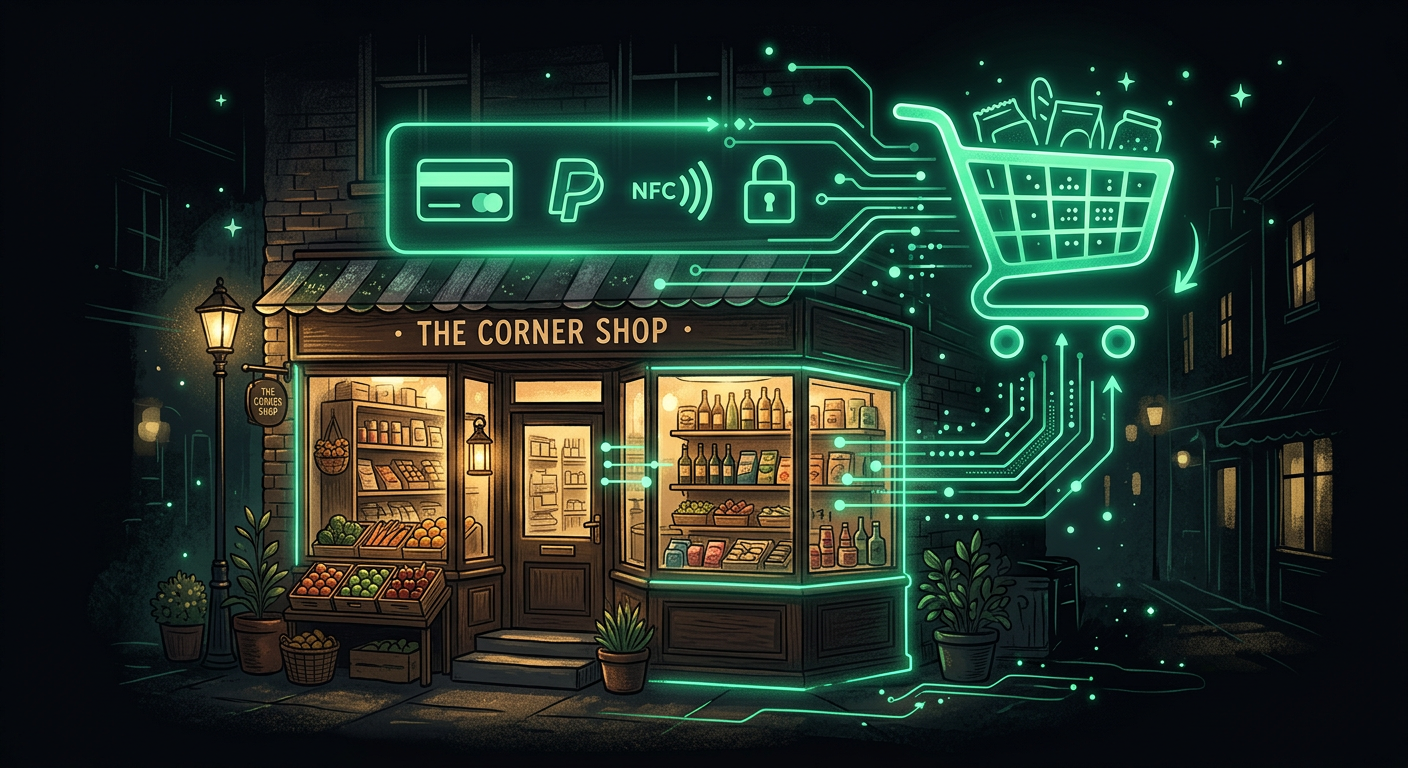
Local businesses that start selling online typically see a 15-30% revenue increase within the first year. That is not a hypothetical — it is a pattern I have watched play out with bakeries, boutiques, specialty food shops, and service providers who decided to make their products available beyond their storefront. The barrier to entry has never been lower, but the number of decisions you need to make can feel paralyzing. Platform, payment processor, shipping strategy, product photography — each choice matters, and making the wrong one early can cost you months of rework. Here is how to get it right the first time.
Choosing the Right Platform
The platform decision is the most consequential one you will make, because switching later is painful and expensive. Each major option serves a different type of business.
Shopify
Shopify is the default recommendation for most local businesses going online, and that is for good reason. It handles hosting, security, payment processing, and provides a complete set of tools out of the box. You do not need to think about servers, software updates, or SSL certificates.
The Basic plan at $39/month gives you everything you need to start: unlimited products, discount codes, abandoned cart recovery, and a solid set of free themes. The transaction fee is 2.9% + 30 cents per online transaction if you use Shopify Payments (their built-in processor powered by Stripe), or an additional 2% fee on top of your payment processor's fees if you use a third-party gateway.
Where Shopify excels is in its app ecosystem. Need to add local delivery? There is an app for that. Want to offer subscription boxes? Multiple apps handle it. Need to sync inventory with your point-of-sale system in-store? Shopify POS ties your physical and online stores together seamlessly.
The limitation is customization depth. Shopify's themes are attractive but somewhat rigid. If you want a highly custom design or unusual functionality, you will need a developer familiar with Shopify's Liquid templating language, which adds cost.
WooCommerce
WooCommerce is a free plugin for WordPress, which makes it appealing from a cost perspective. You pay for hosting (typically $10-30/month for decent shared hosting, or $30-80/month for managed WordPress hosting through providers like WP Engine or Kinsta), your domain name, and any premium extensions you need.
The strength of WooCommerce is total flexibility. Because it is open-source and built on WordPress, virtually anything is possible. Complex product configurations, unusual shipping calculations, deep content integration — if you can describe it, WooCommerce can probably do it.
The trade-off is responsibility. You are in charge of hosting, security updates, plugin compatibility, performance optimization, and backups. For businesses with a technically-inclined owner or a relationship with a WordPress developer, this is manageable. For businesses without technical resources, the ongoing maintenance burden can become a distraction from running the actual business.
WooCommerce is the strongest choice for businesses that already have a WordPress website with strong SEO and content — adding e-commerce to an existing content-rich site rather than building a separate store.
Squarespace
Squarespace offers beautiful, design-forward templates that work well for businesses where visual presentation is critical — artisan goods, fashion, photography prints, food products. The Commerce Basic plan at $33/month includes everything you need, with transaction fees of 0% on all plans (you only pay your payment processor's fees).
Squarespace is simpler than both Shopify and WooCommerce, which is both its strength and its limitation. Setting up a store is fast and the design tools are intuitive, but the product management features are more limited. Inventory tracking is basic, and the app ecosystem is much smaller than Shopify's.
For local businesses selling a curated selection of 10-100 products where the brand aesthetic matters as much as the product itself, Squarespace is a strong contender. For businesses with large catalogs, complex shipping needs, or plans to scale significantly, it will feel constraining relatively quickly.
Custom-Built Solutions
A custom e-commerce site — built from scratch or on a framework like Next.js with a headless commerce backend such as Medusa, Saleor, or Shopify's Storefront API — costs $15,000-80,000+ to build and $500-2,000/month to maintain. This path makes sense only for businesses with unique requirements that no existing platform can meet, or for businesses at a scale where platform fees become significant (typically over $50,000/month in revenue).
For most local businesses starting their online journey, a custom solution is overkill. Start with a platform, prove the market, and consider custom only when your platform is clearly holding back growth.
Payment Processing
Getting paid online involves choosing a payment processor, which handles the actual transfer of money from your customer's bank account or credit card to yours.
Stripe
Stripe is the most widely used payment processor for online businesses. The standard rate is 2.9% + 30 cents per transaction, with no monthly fees. Setup is straightforward, payouts are fast (typically 2 business days), and the fraud detection (Stripe Radar) is excellent.
Stripe also supports a wide range of payment methods beyond credit cards: Apple Pay, Google Pay, Klarna (buy now, pay later), ACH bank transfers, and more. Offering multiple payment options typically increases conversion rates by 5-15%.
Square
If you already use Square for your in-store point-of-sale system, using Square Online keeps everything in one ecosystem. The online transaction rate is 2.9% + 30 cents — identical to Stripe. The advantage is unified reporting: you see in-store and online sales in the same dashboard, with shared inventory and customer data.
Square Online also offers a free plan with basic e-commerce functionality, which can be a low-risk way to test online sales before committing to a paid platform. The free plan has some limitations (Square branding on your site, limited customization), but it is functional enough to validate demand.
Important Considerations
Whichever processor you choose, understand the chargeback process. When a customer disputes a charge, the processor temporarily removes the funds from your account and you need to provide evidence that the transaction was legitimate. Chargebacks cost $15-25 each even if you win the dispute. Clear product descriptions, accurate photos, confirmation emails, and tracking numbers all serve as evidence if a dispute arises.
Also, factor in your average order value when evaluating processing costs. The flat 30-cent fee per transaction matters more for low-priced items. If your average order is $10, the effective processing rate is over 5.9%. If your average order is $100, it is about 3.2%. For very low-priced items, consider setting a minimum order amount.
Shipping and Fulfillment
Shipping is where many local businesses get tripped up. It seems simple — put the product in a box and mail it — but the details matter enormously for profitability and customer satisfaction.
Shipping Strategy
You have three main approaches to shipping costs.
Free shipping is the strongest conversion driver. Customers have been trained by Amazon to expect it, and "unexpected shipping costs" is the number one reason for cart abandonment. The trade-off is that you absorb the cost, which means either building it into your product prices (the most common approach) or accepting lower margins. Free shipping works best when your average order value is high enough to absorb the cost — typically $50 or more.
Flat-rate shipping is the middle ground. Charging $5.99 or $7.99 for shipping regardless of order size is predictable for customers and simple to manage. You will over-charge on some orders and under-charge on others, but it averages out. This works well when your products are similar in size and weight.
Calculated shipping passes the exact carrier cost to the customer, which is the most accurate but often leads to sticker shock at checkout. Use this approach for heavy or oversized items where absorbing or flat-rating the shipping cost would be impractical.
Carrier Options
USPS is typically the cheapest for packages under 1 pound (First Class Mail) and offers flat-rate Priority Mail boxes that simplify pricing for heavier items. UPS and FedEx are more competitive for packages over 2 pounds and offer better tracking and delivery reliability for time-sensitive shipments.
Services like Pirate Ship, ShipStation, and Shopify Shipping give you access to discounted commercial rates — often 30-50% less than what you would pay at the post office counter. These savings go directly to your bottom line if you are offering free or flat-rate shipping.
Local Delivery
Here is where local businesses have a massive advantage over pure online retailers. Offering same-day or next-day local delivery creates a value proposition that Amazon cannot match for many product categories.
Set a delivery radius (5-15 miles is typical), a minimum order amount ($25-50), and either a small delivery fee ($3-5) or free delivery above a threshold. You can handle deliveries yourself during slow business hours, hire a part-time driver, or use services like DoorDash Drive or Uber Direct for on-demand delivery without managing your own fleet.
Local delivery is particularly powerful for perishable goods (bakeries, restaurants, florists), heavy items (pet food, beverages), and urgent needs (hardware supplies, pharmacy items).
Product Photography
Online, your photos are your product. In a physical store, customers can touch, smell, and examine items. Online, they have photos and descriptions — and photos do the heavy lifting. You do not need a professional photographer to get started, but you do need to be intentional about quality.
The Basics
Use natural light. Position your products near a large window (not in direct sunlight, which creates harsh shadows) and shoot during daylight hours. A cloudy day actually provides the best light — it is diffused and even, eliminating sharp shadows.
Use a clean, simple background. A white poster board, a sheet of white paper, or a purpose-built lightbox ($30-60 on Amazon) eliminates distracting backgrounds. Consistency matters more than perfection — all your product photos should have the same look and feel.
Take multiple angles. The main image should show the product clearly from the front. Additional images should show the sides, back, close-up details, and the product in use or in context. Five to seven images per product is a good target.
Editing
You do not need Photoshop. Free tools like Canva or the built-in editing tools on your phone can adjust brightness, contrast, and white balance. The goal is accurate color representation and consistent brightness across all your product images. Customers who receive a product that looks different from the photo lose trust quickly.
Lifestyle Photos
Beyond clean product shots, include at least one "lifestyle" photo showing the product being used in a real-world context. A mug filled with coffee on a desk. A scarf draped over someone's shoulders. A tool being used in a workshop. These photos help customers imagine the product in their own lives, which is a powerful conversion driver.
SEO for Product Pages
Search engine optimization for product pages is different from blog SEO. People searching for products use different language and have different intent — they are closer to buying and their searches are more specific.
Product Titles and Descriptions
Your product title should include the specific product name, key attributes (size, color, material), and your brand name. "Handmade Lavender Soy Candle — 8oz — Mountain Meadow Candles" is far more searchable than "Relaxation Candle."
Product descriptions should lead with benefits, not features. Do not start with "This candle is made from 100% soy wax." Start with "Fill your home with the calming scent of real lavender, harvested from organic farms in Provence." Then cover the features, materials, dimensions, and care instructions.
Write unique descriptions for every product. Copying the manufacturer's description (if you sell other brands' products) means you are competing with every other retailer using the same text. Your unique perspective and voice are an SEO advantage.
Category and Collection Pages
Organize your products into logical categories and write unique introductory text for each category page. "Shop our collection of hand-poured soy candles, made in small batches in Portland, Oregon. Each candle burns for 40-60 hours and uses only natural essential oils" gives search engines context and gives customers confidence.
Schema Markup
Most e-commerce platforms automatically add product schema markup (structured data that helps Google understand your product pages), but verify it is working. Google's Rich Results Test tool lets you check any URL. Proper schema markup can earn you rich snippets in search results — showing price, availability, and review stars directly in the search listing, which significantly increases click-through rates.
Inventory Management
Avoiding Overselling
If you sell through multiple channels — your online store, an Etsy shop, a physical storefront, farmers markets — keeping inventory synced across all channels is critical. Nothing damages customer trust faster than selling a product you do not have.
Most platforms offer multi-channel inventory sync. Shopify can sync with Amazon, eBay, Facebook Shops, and your in-store POS. WooCommerce plugins like WP Inventory Manager handle multi-location tracking. Dedicated inventory tools like Cin7 or Katana MRP work across platforms for businesses with complex needs.
Demand Forecasting
Even basic demand forecasting helps you make better purchasing decisions. Track your sales velocity (units sold per week) for each product and set reorder points based on your supplier lead times. If a product sells 10 units per week and your supplier takes 3 weeks to deliver, reorder when stock hits 30-40 units (the extra 10 provides a safety buffer).
Your e-commerce platform's analytics will show you trending products, seasonal patterns, and slow movers. Use this data to make informed inventory decisions rather than guessing.
Returns and Refunds
A clear, fair return policy is not just good customer service — it actually increases sales. Research consistently shows that generous return policies increase purchase confidence and conversion rates by more than they increase actual return rates.
Crafting Your Policy
State the return window (14-30 days is standard, 60-90 days signals high confidence in your product), the condition requirements (unused, original packaging), who pays return shipping (you absorb it for defective items, customer pays for preference returns — or you eat all return shipping costs for maximum customer satisfaction), and the refund method (original payment method, store credit, or exchange).
Put the policy in at least three places: a dedicated policy page, the product page (or a link from it), and the order confirmation email. Customers should never have to search for your return policy.
Handling Returns Operationally
Create a simple process: customer requests a return through a form or email, you send a return authorization with instructions, you process the refund within 2-3 business days of receiving the item. Tools like Loop Returns, Returnly, and AfterShip Returns automate this process for Shopify stores, turning returns into exchanges or store credit automatically.
Marketing Your Online Store
Building the store is only half the battle. Without traffic, even the most beautiful store with the best products will not generate sales.
Email Marketing
Build your email list from day one. Offer a 10-15% discount on the first order in exchange for an email signup. Then nurture that list with new product announcements, behind-the-scenes content, exclusive offers, and seasonal promotions. Email consistently outperforms all other marketing channels for e-commerce ROI.
Social Media
Focus on one or two platforms where your customers actually spend time, rather than trying to be everywhere. Instagram and Facebook work well for visual products (food, fashion, home goods, art). Pinterest drives significant e-commerce traffic for products in the home, fashion, and craft categories. TikTok works for businesses with a personality-driven brand and products that lend themselves to demonstration or storytelling.
Post consistently (3-5 times per week), respond to every comment and message, and use the shopping features built into each platform. Instagram Shopping, Facebook Shops, and Pinterest Product Pins let customers browse and buy without leaving the social platform.
Google Shopping
Google Shopping ads put your products directly in search results with an image, price, and your store name. For local businesses, these ads can be targeted geographically — show your products to people within 25 miles who are actively searching for what you sell. The setup requires a Google Merchant Center account and a product feed (most platforms generate this automatically), and you pay only when someone clicks through to your site.
Local SEO
Do not neglect your Google Business Profile. Even as an online store, your local presence matters. Update your profile with your website, product categories, and business hours. Post regularly (Google Business posts appear in local search results). Encourage satisfied customers to leave reviews — businesses with more positive reviews rank higher in local search results.
Cost Breakdown by Platform
Here is a realistic year-one cost comparison for a local business launching an online store with approximately 50 products and $5,000/month in sales.
Shopify
Monthly platform fee (Basic): $39/month, totaling $468/year. Domain name: $14/year. Transaction fees at 2.9% + $0.30 on $60,000 in annual sales (assuming roughly 600 transactions): approximately $1,920/year. Premium theme (one-time): $180. Essential apps (reviews, email marketing, shipping): $30-80/month, totaling $360-960/year. Total year-one cost: approximately $2,942-3,542.
WooCommerce
Managed WordPress hosting: $30/month, totaling $360/year. Domain name: $14/year. WooCommerce (free) plus essential paid extensions (shipping, payments, subscriptions): $200-500/year. Premium theme: $60-80. Payment processing at 2.9% + $0.30 on $60,000 in sales: approximately $1,920/year. SSL certificate (often included with hosting): $0-70/year. Total year-one cost: approximately $2,554-2,944.
Squarespace
Monthly platform fee (Commerce Basic): $33/month, totaling $396/year. Domain name (first year included): $0. Transaction fees: $0 from Squarespace (only payment processor fees). Payment processing at 2.9% + $0.30 on $60,000 in sales: approximately $1,920/year. Extensions and integrations: $100-300/year. Total year-one cost: approximately $2,416-2,616.
The Real Comparison
Squarespace has the lowest direct costs but the most limited growth ceiling. WooCommerce offers the most flexibility but requires more hands-on management. Shopify sits in the middle with the strongest balance of features, ease of use, and scalability. All three are surprisingly close in total cost of ownership for a business of this size.
The platform cost is ultimately a small fraction of what makes an online store successful. Product quality, photography, marketing, and customer service drive revenue. The platform just needs to get out of the way and let you sell — and all three of these options do that effectively.
Getting Started This Week
If you are a local business ready to start selling online, here is a practical timeline. Week one: choose your platform, set up your account, and pick a theme. Week two: photograph your first 10-20 products and write descriptions. Week three: configure shipping, payment processing, and your return policy. Week four: soft launch to your existing customers through email and social media, gather feedback, and refine.
You do not need every product online on day one. You do not need a perfect website. You need a functional store with your best-selling products, clear photography, honest descriptions, and a way for people to pay. Start there, learn from real customer behavior, and improve continuously. The businesses that succeed online are not the ones that launched with the most polished store — they are the ones that launched, listened, and iterated.
Danil Ulmashev
Full Stack Developer
Need a senior developer to build something like this for your business?