Do I Need a Website If I Have Instagram?
An honest answer from a developer: when Instagram alone is genuinely enough for your business, when it's quietly costing you customers, and the cheap middle ground nobody mentions.
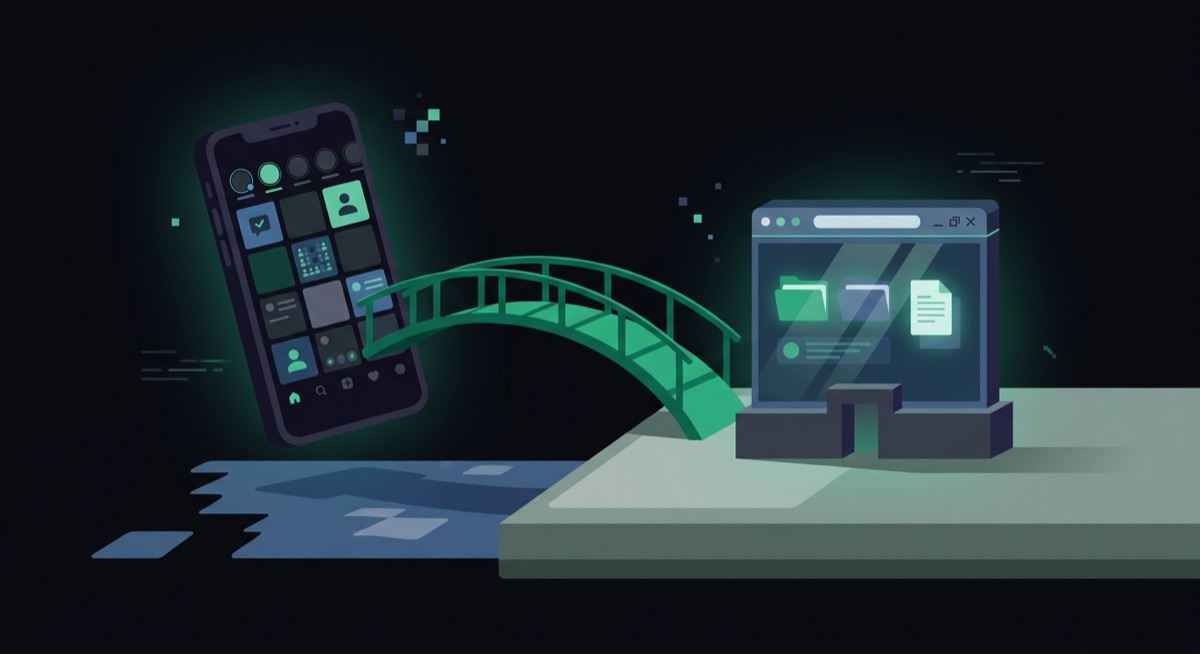
If your customers find you by scrolling, Instagram might genuinely be enough. If your customers find you by searching Google for things like "wedding photographer Montreal" or "dog groomer near me," you are invisible without a website, and you're losing money right now.
That's the short answer. The rest of this post is about figuring out which of those two businesses you actually run, because most owners guess wrong.
Quick disclosure before we start: I build websites for a living, so I have an obvious financial interest in telling you that you need one. I'm going to try to earn your trust by doing the opposite first.
When Is Instagram Actually Enough?
Instagram alone works fine when discovery, browsing, and buying all happen inside the feed. There are real businesses like this, and if you run one, a website should not be your next investment.
You're probably fine with just Instagram if:
- You sell visual, impulse-friendly products (custom cakes, nail art, prints, thrifted clothing) and orders come in through DMs
- Your average sale is small, under $100 or so, and nobody researches you before buying
- You're still validating the business and don't know yet if people want what you sell
- Your calendar is already full from referrals and you couldn't take more clients if they showed up
- Your growth engine is genuinely content: you post consistently, Reels get reach, and followers convert
If that's you, keep going. Spend your energy on content, not on a website that duplicates your grid. Revisit the question when growth slows or when the average order gets bigger.
For everyone else, there are four problems with running a business entirely on Instagram, and they compound.
What Happens If Your Account Gets Hacked or Banned?
You lose your entire business overnight, and Meta support will not save you. This isn't a hypothetical.
Leila Manoochehry ran Leila Love Macarons, a bakery in suburban Chicago, almost entirely through Instagram. More than 16,000 followers, roughly 85% of her income coming through the platform. Then hackers took over the account and her sales plummeted. "My business ran on Instagram," she told WGN. That sentence is the whole problem.
Or take WR Mattress Gallery in South Surrey, B.C. Their account got hacked after a video went viral, and the hacker demanded $1,000 USD over WhatsApp, threatening to delete the account permanently. The business was locked out for about two months. The account only came back after a TV consumer-affairs show contacted Meta directly. Most small businesses don't have a news outlet willing to make that call for them.
And hacking is just one failure mode. Accounts get falsely flagged and suspended by automated systems. Reels that worked stop working after an algorithm change. None of this requires anyone to do anything wrong. You built your store on rented land, and the landlord doesn't answer the phone.
A website can go down too, sure. But you own the domain, the code, and the customer list, so the worst case is an afternoon of annoyance, not starting from zero.
How Many of Your Followers Actually See Your Posts?
About 3 to 4 out of every 100, and the number drops every year. Socialinsider's reach study puts Instagram's average organic reach rate at around 3.5% of followers, down 12% year over year. Other analyses of business accounts land in the same range, meaning over 96% of your audience never sees a given post unless you pay to promote it.
Think about what that means in practice. You spent three years building 5,000 followers. When you post your new menu, your new prices, your holiday hours, roughly 175 people see it. Five years ago it would have been 500 to 750. The platform didn't break; it matured, and mature platforms monetize by charging you to reach the audience you already built.
A page on your website doesn't decay like that. A post I write today can bring in customers from Google search for years, at zero cost per view. The feed rewards you for yesterday's content exactly once.
What Happens When Someone Googles Your Service in Your City?
They find your competitors. That's the expensive part, and it's the part Instagram-only businesses never see, because you can't see searches you didn't show up for.
BrightLocal's research found that 98% of consumers used the internet to find information about local businesses. When someone types "electrician in Verdun" or "physio near me" into Google, they have money in hand and a problem to solve today. Google answers with a map pack and a list of websites. Instagram profiles essentially never rank for these searches. Your beautifully maintained grid, your 4,000 followers, your two years of daily Stories: none of it exists in that moment.
Here in Montreal I see this constantly. A caterer with a gorgeous Instagram and zero web presence loses the corporate lunch contract to a mediocre competitor with a five-page website, because the office manager searched "corporate catering Montreal" and only one of them showed up.
Search traffic is also a different kind of customer. On Instagram, you interrupt people who weren't shopping. On Google, you answer people who were.
Will Customers Trust You With a Bigger Purchase?
For anything over a few hundred dollars, an Instagram-only presence costs you deals you never knew you were in.
Small purchases are trust-cheap. Nobody researches a $30 candle. But someone about to spend $3,000 on a renovation, $1,500 on a wedding cake, or a monthly retainer on your services will check you out first, and "no website" reads a specific way: temporary, side hustle, might not exist next year. Fair or not, that's the read. Businesses buying from other businesses are even stricter about it; plenty of procurement processes quietly require a company website and a professional email address just to be considered.
A website also lets you present things Instagram structurally can't: detailed service descriptions, pricing, FAQs, testimonials in context, your story told in order rather than in reverse-chronological fragments. On Instagram, your best work from 2024 is buried 300 posts deep. On a website, it's on the homepage.
Followers You Rent vs. Customers You Own
Here's the difference that matters most long-term. Your follower list belongs to Meta. Your email list belongs to you.
You cannot export your followers. If the account dies, they're gone, every one of them, and you have no way to tell them where you went. Leila's bakery had 16,000 followers and lost the ability to contact all of them in a single day.
An email list is the opposite. It's a file you own. It moves with you between tools, it survives every algorithm change, and it reaches everyone you send to instead of 3.5% of them. The only practical way to build one is a place you control where people can sign up, which usually means a website, even a tiny one.
You don't need to become an email marketer. A simple "get on the list for new dates / new drops / seasonal offers" form, mentioned occasionally in your Stories, quietly converts rented followers into owned customers. Do that for a year and platform risk stops being existential.
The Practical Middle Ground (This Is What I'd Actually Do)
You don't need to choose between "Instagram only" and "$10,000 agency website." The step most Instagram-first businesses should take is small:
- A one-page website. Who you are, what you do, where you are, photos of your work, prices or starting prices, and one obvious way to contact or book you. That's it.
- A free Google Business Profile, linked to that page, with your hours, photos, and reviews.
That combination gets you into local search results, gives DM leads a link that answers their questions while you sleep, starts collecting emails, and acts as your backup if Instagram ever locks you out. Keep posting on Instagram; it stays your marketing channel. The website is your foundation under it.
The Honest Checklist
Instagram is enough for you, for now, if:
- Sales are small, visual, and impulsive, and they close in DMs
- Nobody searches Google for what you sell; they discover it by scrolling
- You're pre-validation or fully booked
- Losing the account tomorrow would hurt but not end the business
You're losing money without a website if:
- People search "your service + your city" and you're not in the results
- Your average sale is big enough that customers research before buying
- More than half your income depends on one social account
- You answer the same five questions in DMs every single day
- Businesses or event planners are part of your customer base
- You have zero way to contact your followers outside the platform
If you landed mostly in the second list, the follow-up question is what kind of site and what it should cost, which I covered in Does My Business Actually Need a Website in 2026?
Where I Land
I'll say the biased part plainly: I'm a developer in Montreal and I build exactly the kind of simple, fast site described above, for a flat $1,000, live in 7 days, code you own. So weigh my opinion accordingly.
But the core argument doesn't depend on hiring me, or hiring anyone. Instagram is a marketing channel that happens to let you sell. It rents you an audience, shows your posts to 3.5% of it, and can evict you without notice. If everything your business earns flows through it, you don't own a business asset; you're borrowing one. A basic website plus a Google Business Profile, built by you on a $20/month builder or by someone like me, is the cheapest insurance policy your business can buy. Keep the Instagram. Just stop letting it be the only thing holding your business up.
Danil Ulmashev
Full Stack Developer
Interesse an einer Zusammenarbeit?